
The Mess is the Medicine
I remember my last meeting as a corporate executive like it was yesterday.
It was with the CEO of the company – a man I respected deeply and had worked alongside for years. As we wrapped up, he asked what I'd be doing in retirement.
I smiled and corrected him immediately. "Retirement? I'm not retiring. I'm creating a wellness company.”
Then I boldly declared, “And I'm going to be more successful as an entrepreneur than I ever was as a corporate executive."
He nodded thoughtfully, as was his way, before offering a quiet observation. “My sister left her law career three years ago, and she’s just getting traction. This kind of transition often takes longer than people expect.”
As always, I appreciated his counsel. But this time I had the luxury to file it away, convinced that my experience would be different. I walked out of that building on my last day with absolute certainty about what came next. I had a plan, a timeline, a vision. I was confident and ready.
What I didn't know – what I couldn't have known – was that the feelings of certainty and readiness are fool’s gold. And that the messy, disorienting journey between my corporate life and the one I envisioned would turn out to be the most humbling and important work of my life.
Years later when he announced his retirement, I sent him a long email telling him how right he had been. I was also in a position to offer something I'd learned that I thought might serve him – that the messy middle is the medicine. He sent a thoughtful reply, grateful for the timely reminder to let the journey unfold.
The Identity You Didn't Know You Were Leaving Behind
What made the journey so disorienting wasn't the workload or the uncertainty of building something new. It was something I hadn't anticipated and couldn’t name. It was the loss of who I thought I was.
For decades, my professional identity was interwoven into my life in ways I never considered – like a fish that doesn’t realize it’s in water. The role, the expertise, the way I solved problems or offered answers – these weren't just professional markers. They were the architecture of my sense of self. And when I walked out of that building for the last time, I didn’t realize that my old identity no longer existed, yet my entrepreneurial identity had not formed.
That's what the mess is really about. Not the logistics of transition. The loss of self that no amount of planning can prepare you for.
And here's what makes it particularly disorienting: until the new identity emerges, we have very little to stand on. We exist in the liminal space between who we were and who we're in the process of becoming.
It's an in-between state that defies the very competencies that made us successful. You can't think your way out of it. You can't execute your way through it. You can only inhabit it and learn, slowly and imperfectly, to trust what you cannot yet see.
This is further intensified because the process has its own intelligence and its own timeline. Layers that no longer serve you – old assumptions, outdated beliefs, identities that fit a life you're no longer living – have to be shed before the new ones can form. This delayering isn't something you can schedule or accelerate. It happens on its own terms, in its own time, whether you're ready for it or not.
And that's precisely when the fear of falling behind sets in. The instinct is to get back on plan. To push harder. To do more. To find the strategy that will finally make things move at the pace you're used to. But that’s not what feeds the new self.
The good news is this: beneath the surface of the confusion, disorientation and the unsettling quiet, the new self is forming. The blueprint of who you're becoming is already taking shape. You just can't see it yet. And that invisibility is perhaps the hardest part of all.
What the Mess Actually Is
In my book, Walking with the Sage, I describe this period of transformation as the goo – a term borrowed from the natural world.
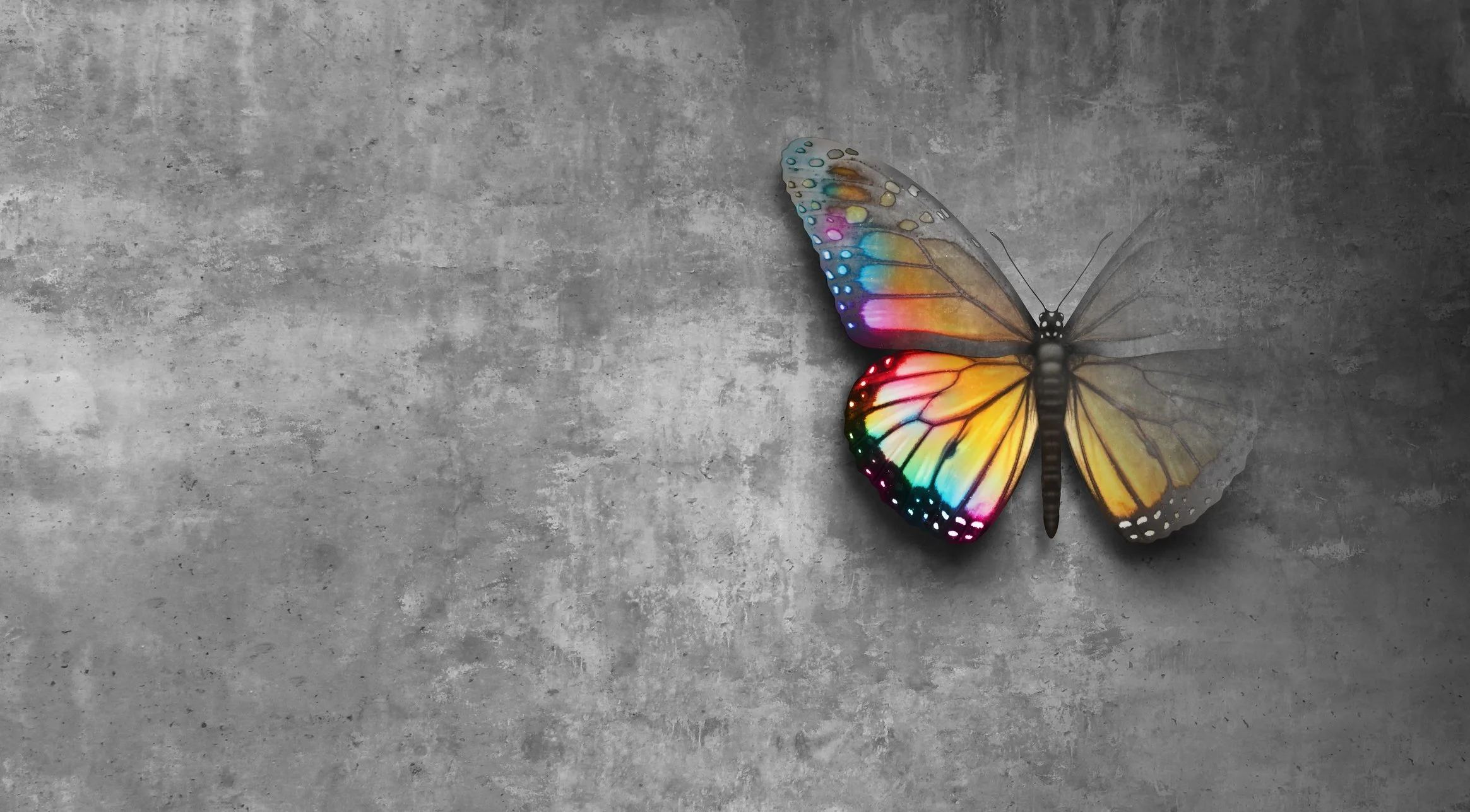
When a caterpillar enters its cocoon, something remarkable happens. It doesn't simply grow wings. It dissolves. The caterpillar's body breaks down almost entirely into liquid – a formless, unrecognizable state that contains neither what it was nor what it's becoming. The old structure must be released completely before the new one can form.
This is the goo. And it's not a malfunction. It's the mechanism of transformation itself.
What you're experiencing in the messy middle of your own transition is a version of this process. The old identity – all the ways of being that defined you for decades – is dissolving. Not because something went wrong. Because something is going right.
The mess is the medicine. Because what looks like falling apart is actually coming together. What feels like regression is actually preparation. What seems like confusion is actually the clearing of everything that no longer serves the person you're becoming.
There are no shortcuts through this process. The timing of transformation is its own, and it cannot be rushed – no matter how capable, prepared, or impatient you are.
Signs the Medicine is Working
Here's what I've learned, both from my own journey and from walking alongside others through theirs: the experiences that feel most disconcerting during transition are often the clearest signs that the transformation is real.
Here are six signs that you’re deep in the transformative medicine:
You feel like you don't recognize yourself. The roles, titles, and personas that defined you are falling away. The person you were in your prior life – the one who always had answers, always knew what to do next – feels strangely distant. This disorientation is healthy. It means the old identity is releasing its grip.
You can't force things the way you used to. Trusty warrior's tools, like pushing harder, working longer, and optimizing relentlessly, aren't producing the results they once did. Control feels elusive. This is an invitation to discover a different way of moving through the world. The Sage's way that values receptivity and a slower pace.
You're grieving what you’ve left behind. The unexpected sadness of releasing something successful can catch you completely off guard. Even if you’re feeling good about the direction of your new life, this grief is real. And it’s healthy. It means you're letting go for real.
Time feels different. The old urgency has lifted, but the new rhythm hasn't fully arrived yet. Days feel simultaneously too long and too short. The relentless forward momentum of your prior life has stilled, and the quiet can feel unsettling. This in-between feeling has a name: liminal space. And it's doing its work.
Small things feel surprisingly meaningful. A walk in nature brings unexpected clarity. A conversation touches something deep. A book falls open to exactly the right page at exactly the right moment. Your senses are heightening as your analytical mind quiets and you begin to hear your inner wisdom.
You keep returning to the same questions. Who am I now? What do I really want? What matters most? These questions feel circular, even maddening. But they aren't signs of confusion. They're the right questions to hold and honor their depth instead of searching for a surface answer.
Why There Are No Shortcuts
Perhaps you’re wondering if there’s a way to move through this more efficiently. To compress the timeline. To get to the other side faster.
I thought the same thing.
But here's what the butterfly teaches us: the struggle to emerge from the cocoon isn't an obstacle to flight. It's the preparation for it. The effort required to break free builds the strength the butterfly needs to survive once it does. If you were to cut open the cocoon to help it out, the butterfly would emerge too weak to fly.
The mess is building something in you that ease cannot.
Every moment of uncertainty is developing your tolerance for the unknown, a helpful quality when walking the Sage path. Every experience of grief is clearing space for something more aligned. Every failed attempt to force the process is teaching you the difference between obligated doing and productive action.
Your job isn't to speed up the process. It's to stay in it long enough to let it work. Yes, this may take longer than you’d prefer. But the time it takes is not wasted. It's what’s required to become someone capable of living the life you're building.
What the Medicine Gives You
I couldn't have told you, sitting across from my former CEO making my bold declaration, how the journey ahead would actually unfold. And I couldn't have imagined the unexpected gifts of being in the goo or what would eventually emerge from the messy middle.
But now I know what the medicine gave me.
It gave me clarity that only comes from stripping away everything that doesn't serve. Not the clarity of my plan, but the clarity of knowing – deeply, quietly, unshakably – who I am and what I'm here to do.
It gave me access to a truer version of myself. The parts that had been tucked away during decades of my professional life finally had room to emerge.
It gave me wisdom that can only be earned through experience. Not the knowledge you acquire from books or courses, but the knowing that comes from having navigated the unknown and found your way through.
And it gave me the life I'm living now, one that came from following the breadcrumbs, trusting the process and staying in the mess long enough to let it do its work.
None of this would have been possible without the full journey, including the medicine of being deep in the goo.
If You're in the Goo Right Now
You're not behind. You're not failing. You're not doing it wrong. You're in the medicine.
The transformation is happening even when you can't see it. The timing is unfolding perfectly even when it doesn't feel that way. The person you're becoming is already taking shape in the quiet, formless space of your own becoming.
The mess isn't a detour from the path. It is the path. Trust the process. Trust the mess. Trust the medicine. It's working its magic.
Journal Reflections: What signs of transformation are you currently experiencing? Where in your transition are you trying to rush or shortcut the process? What might happen if you trusted the timing instead?
P.S. Continue the Journey: Walking with the Sage is out now. You can find the story of that transformation and download the free Sage Discovery Kit at AthenaWellness.com/sagebook.
Other Links:
YouTube: The Athena Wellness Channel
Work with Kathy: Coaching Opportunities
Email Kathy: hello@athenawellness.com